Digital Nomad Visas for Dutch Citizens (2026)
Last updated July 21, 2026.
Dutch citizens have full EU free movement, so they need no visa to live and work remotely anywhere in the EU or EEA. A digital nomad visa only matters for non-EU destinations such as Thailand, Mexico, the UAE and Georgia, plus the Dutch Caribbean islands of Curacao and Aruba, and the key planning question is whether you have genuinely ended Dutch tax residence.
A Dutch passport already removes most of the reason to hunt for a nomad visa. EU free movement lets you settle in Spain, Portugal, Italy, Greece or any member state with no permit and no income test, and one of the world's strongest passports clears short visa-free stays almost everywhere else. That leaves two interesting cases. First, the non-EU destinations where a tourist stamp runs out in 30 to 90 days and a nomad visa buys you a legal year or more: Southeast Asia, the Gulf, Latin America and the Caribbean. Second, the islands of the Kingdom itself — Curacao and Aruba — where Dutch nationals have easier admission than foreigners but which are separate countries with their own tax systems. This guide covers where the paperwork pays off and the Dutch rules that decide whether the Belastingdienst still counts you as resident.
See every visa you qualify for on your income
Enter your income and passport once — get your ranked shortlist in about 30 seconds. Free, no signup.
Best destinations
- 1
 Curaçao digital nomad visa
As a country within the Kingdom of the Netherlands, Curacao gives Dutch nationals a right of admission that foreigners do not have, plus a @HOME digital nomad programme and a separate, often lighter, local tax system.
No fixed income floor · 6 months, renewable up to 1 year
- 2
 Aruba digital nomad visa
Also part of the Kingdom, Aruba lets Dutch citizens settle far more easily than other nationalities and runs the One Happy Workation remote-work programme in an English- and Dutch-friendly Caribbean setting.
No fixed income floor · 3 months, not renewable
- 3
 Thailand digital nomad visa
The five-year Destination Thailand Visa gives long, flexible stays in a low-cost hub, and Thailand taxes foreign income only when remitted in the year earned, which suits a clean Dutch exit.
500,000 THB (≈ $14,900) in savings · 5 years, renewable
- 4
 United Arab Emirates digital nomad visa
Dubai's one-year virtual working visa comes with zero personal income tax, so a Dutch citizen who has genuinely ended residence can reset where they are taxed.
$3,500/mo · 1 year, renewable
- 5
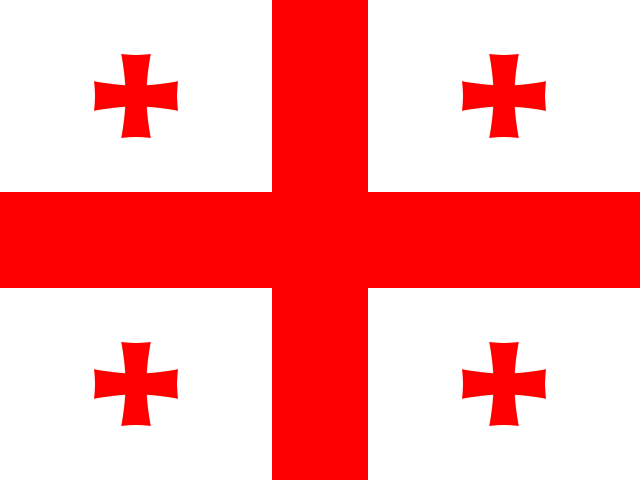 Georgia digital nomad visa
Dutch citizens can stay a full year visa-free and register as an Individual Entrepreneur taxed at 1% of qualifying turnover, one of the simplest low-tax bases near Europe.
$2,000/mo · 1 year, renewable
- 6
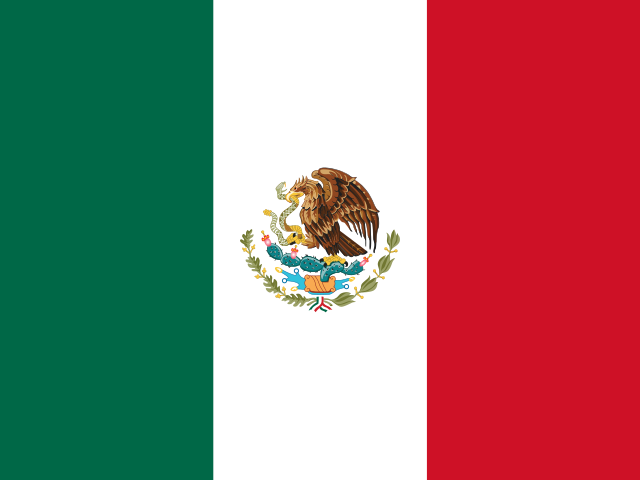 Mexico digital nomad visa
A temporary resident visa on proof of income or savings gives up to four years in a large country with Americas-friendly time zones, strong for Dutch freelancers with US clients.
79,800 MXN/mo (≈ $4,550) · 1 year, renewable up to 4 years
- 7
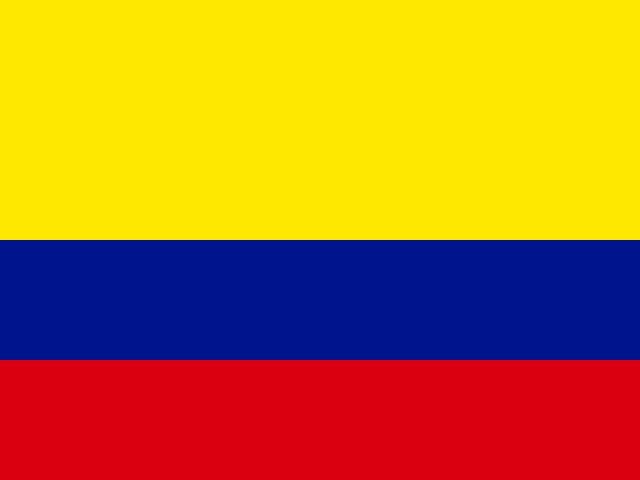 Colombia digital nomad visa
The V digital nomad visa is inexpensive and light on paperwork, and Medellin or Bogota offer low living costs and good internet for stays up to two years.
5,240,600 COP/mo (≈ $1,610) · 2 years, not renewable
- 8
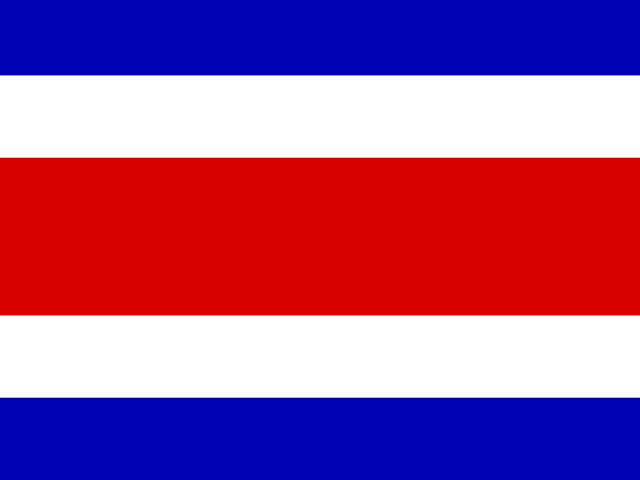 Costa Rica digital nomad visa
The Estatuto de Nomada Digital gives a year, renewable to two, and exempts qualifying foreign income from local tax, a stable Central American base for Dutch remote workers.
$3,000/mo · 1 year, renewable up to 2 years
- 9
 Indonesia digital nomad visa
The E33G remote worker visa gives a year in Bali and beyond at low cost, and Indonesia generally does not tax foreign-sourced income of nomad-visa holders during the stay.
$60,000/yr · 1 year, not renewable
- 10
 Barbados digital nomad visa
The 12-month Welcome Stamp is simple, English-speaking and charges no local income tax on the visa, an easy Caribbean base for Dutch applicants.
$50,000/yr · 1 year, renewable
Your home-country tax obligations
The Netherlands does not decide tax residence with a fixed day count. The Belastingdienst weighs the facts and circumstances of where your life is centred — where your home, partner, family, work and registrations are — so you can be treated as Dutch resident even without spending 183 days here if your ties remain. Dutch residents are taxed on worldwide income across the three boxes: box 1 for work and main home, box 2 for substantial shareholdings, and box 3 for savings and investments. To end residence cleanly you generally deregister from the municipal register (BRP), give up your Dutch home, and move your genuine centre of life abroad. The 30% ruling, the well-known expat tax break, works the other way round — it is an inbound benefit for skilled workers recruited from abroad into a Dutch employer, so it is relevant if you later return to a Dutch job, not while you are leaving to be a nomad. Note that the ruling stays at 30% for 2026 and drops to a flat 27% from 2027, and the partial non-resident status it allowed ends after 2026. The Netherlands has a broad double-tax treaty network that relieves most double taxation, and box 2 shareholders should check the conserverende aanslag (a preserving assessment on emigration). None of this is tax advice — confirm your position with a Dutch adviser and one in your destination.
General information, not tax advice. See our nomad visa taxes guide and consult a qualified adviser.
What dutch citizens typically need
- Dutch passport valid for the whole stay, usually with 6 to 12 months beyond your entry date
- Proof of remote income: an employment contract with a non-local employer, or freelance client contracts and invoices
- Bank statements over three to six months showing the required income or savings
- Private health insurance valid in the destination for the full visa period
- Certificate of good conduct (Verklaring Omtrent het Gedrag / VOG), often apostilled and recently issued
- Passport photos and proof of accommodation or a local address
What a Dutch passport already covers
Inside the EU and EEA there is no nomad visa to apply for. As an EU citizen you can move to any member state, register locally, and work remotely with no income floor to meet. That removes most of Southern Europe's nomad programmes from your list, because they exist to admit non-EU nationals who lack the rights you already hold.
There is also a piece of the map unique to the Dutch: Curacao, Aruba and Sint Maarten are countries within the Kingdom of the Netherlands. They are not part of the EU for these purposes and run their own tax systems, but as a Dutch national you have a right of admission there that other nationalities must apply for, which makes them unusually accessible long-stay options.
- EU/EEA: free movement, no visa, no income test
- Kingdom islands (Curacao, Aruba, Sint Maarten): easier admission for Dutch nationals, separate tax
- Rest of world: short visa-free stays, nomad visa for anything longer
Choosing a base outside the EU
Sort the shortlist by what it adds over an EU move. Zero-tax hubs such as the UAE, and in practice Barbados, suit Dutch citizens who have fully ended residence and want to be taxed somewhere new. Value bases such as Thailand, Indonesia, Mexico, Colombia and Georgia keep costs low while you keep billing in euro or dollars. The Kingdom islands sit in their own category: familiar systems and easy admission, but genuinely separate tax jurisdictions you should treat as a real move.
Match the base to your clients. Americas-facing work fits a Latin American or Caribbean time zone, while European clients keep you close on an African or Gulf base. Curacao and Aruba split the difference, sitting in an Atlantic time zone with strong ties back to the Netherlands.
Leaving the Netherlands and the 30% ruling
Because the Belastingdienst judges residence on facts and circumstances rather than a day count, a clean exit means moving your real centre of life, not just deregistering on paper. Give up the Dutch home, move partner and family where relevant, and keep evidence of where you actually live. Until your ties genuinely shift, you can remain taxable on worldwide income.
The 30% ruling confuses a lot of leavers, so be clear on its direction: it is an inbound perk for skilled workers recruited into a Dutch employer, not a shield for people leaving to be nomads. It holds at 30% for 2026 and becomes a flat 27% from 2027, with the old partial non-resident status ending after 2026 — details that matter if you later come back to a Dutch job. If you hold a substantial shareholding, ask a Dutch adviser about the preserving assessment (conserverende aanslag) triggered on emigration before you move.
FAQ
Do Dutch citizens need a digital nomad visa to live in Spain or Portugal?
Can Dutch citizens move to Curacao or Aruba easily?
Does the 30% ruling help Dutch citizens who leave to work remotely abroad?
How does the Netherlands decide if you are still tax resident?
Which digital nomad visa is best for Dutch citizens?
What documents do Dutch citizens need for a nomad visa?
Sources
Every income threshold, duration, fee, and rule on this page traces to an official government or consulate source. Last verified July 21, 2026.
- PwC Worldwide Tax Summaries — Netherlands: Individual residence ↗
- PwC Worldwide Tax Summaries — Netherlands: Significant developments (30% ruling) ↗
- Your Europe (European Commission) — EU citizens: residence rights ↗
See our verification methodology and themaster source list.