Digital Nomad Visas for French Citizens (2026)
Last updated July 21, 2026.
French citizens have full EU free movement, so they need no visa to live and work remotely anywhere in the EU or EEA. A digital nomad visa only matters for non-EU destinations such as Thailand, Mexico, the UAE, Mauritius and Georgia, where the two things to plan are the local permit and whether you have properly ended French tax residence under Article 4B of the tax code.
A French passport already answers most of the nomad-visa question. EU free movement lets you settle in Spain, Portugal, Italy, Greece or any member state with no permit and no income test, and the passport clears short visa-free stays across most of the world. So the visas worth chasing are the ones that convert a 30-to-90-day tourist stamp into a legal long stay outside Europe: Southeast Asia, the Gulf, Latin America, the Caribbean, and the francophone islands of the Indian Ocean. The catch for French citizens is the exit. France does not release you on a single 183-day rule — it uses four separate residence tests — and it can levy an exit tax on large securities portfolios. This guide covers the destinations that earn their paperwork and the French rules that decide whether the taxman follows you.
See every visa you qualify for on your income
Enter your income and passport once — get your ranked shortlist in about 30 seconds. Free, no signup.
Best destinations
- 1
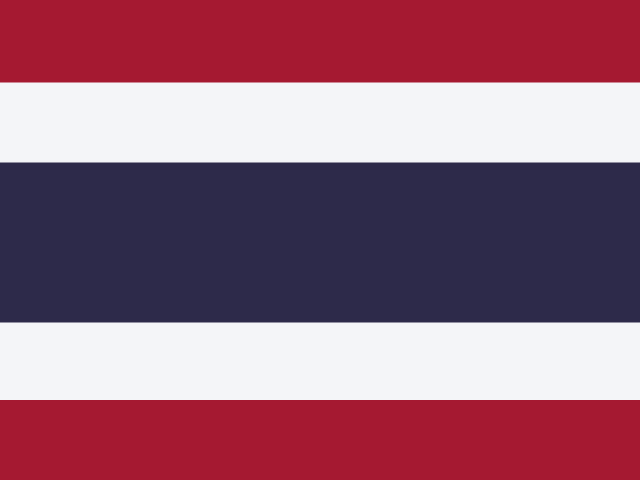 Thailand digital nomad visa
The five-year Destination Thailand Visa gives long, flexible stays in a low-cost hub, and Thailand taxes foreign income only when remitted in the year earned, which suits a clean French exit.
500,000 THB (≈ $14,900) in savings · 5 years, renewable
- 2
 Mauritius digital nomad visa
A francophone Indian Ocean base where the Premium Visa gives a renewable year and no local tax on foreign income kept offshore, with French widely spoken and daily flights to Paris.
$1,500/mo · 1 year, renewable
- 3
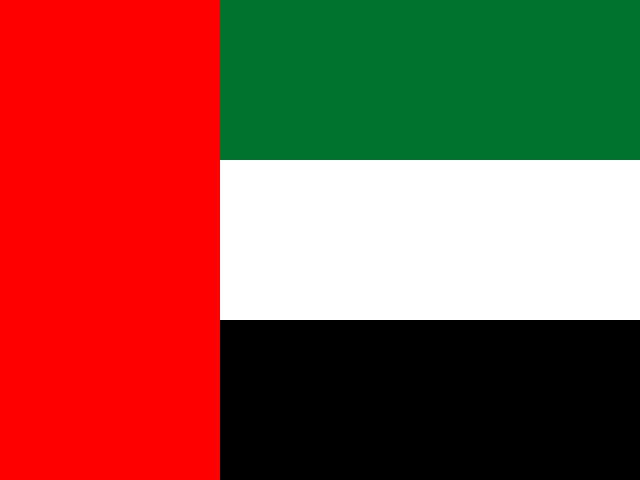 United Arab Emirates digital nomad visa
Dubai's one-year virtual working visa charges no personal income tax, letting a French citizen who has genuinely ended residence reset where they are taxed, with a large French expat community.
$3,500/mo · 1 year, renewable
- 4
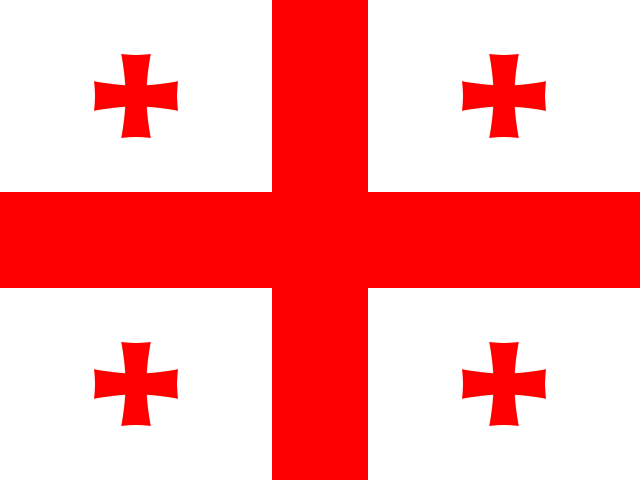 Georgia digital nomad visa
French citizens can stay a full year visa-free and register as an Individual Entrepreneur taxed at 1% of qualifying turnover, one of the simplest low-tax bases near Europe.
$2,000/mo · 1 year, renewable
- 5
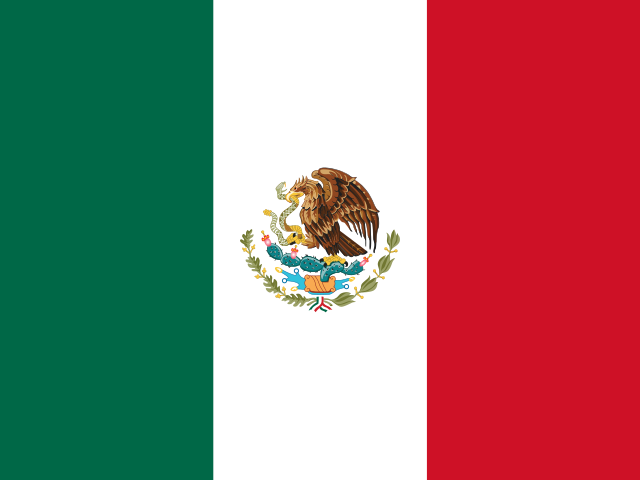 Mexico digital nomad visa
The temporary resident visa on proof of income or savings gives up to four years in a large country with Americas-friendly time zones, strong for French freelancers with US clients.
79,800 MXN/mo (≈ $4,550) · 1 year, renewable up to 4 years
- 6
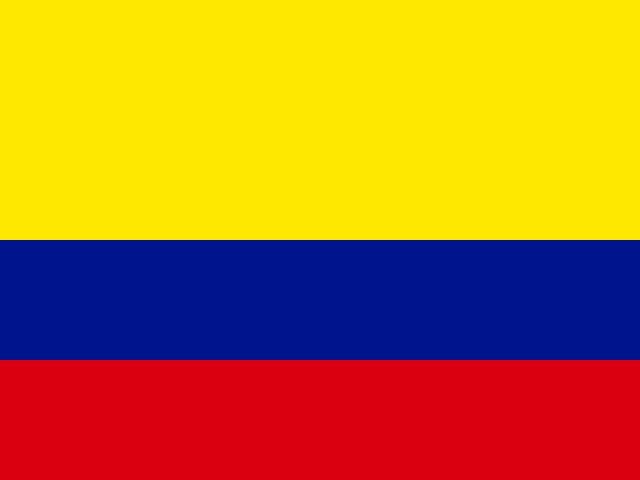 Colombia digital nomad visa
The V digital nomad visa is cheap and light on requirements, and Medellin or Bogota offer low living costs and solid internet for stays of up to two years.
5,240,600 COP/mo (≈ $1,610) · 2 years, not renewable
- 7
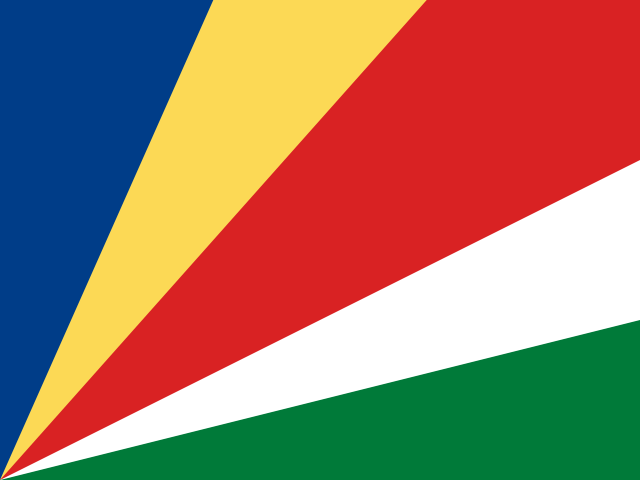 Seychelles digital nomad visa
The Workcation retreat programme lets remote workers stay for up to a year on this francophone island group, with no local income tax on the visa.
No fixed income floor · 1 year, not renewable
- 8
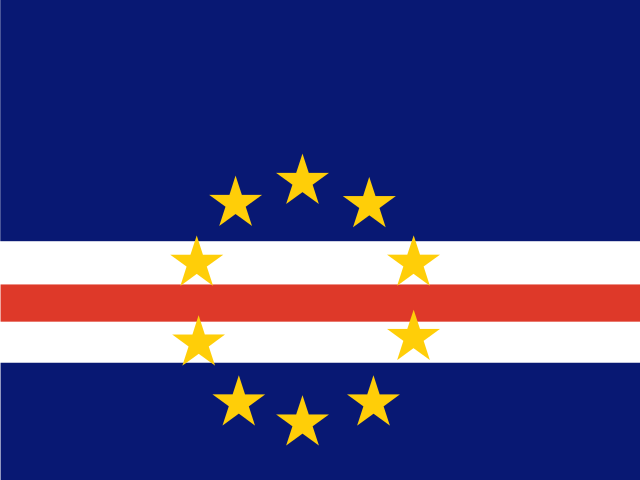 Cape Verde digital nomad visa
The Remote Working Programme offers a renewable stay on Atlantic islands in a European time zone, a short hop from mainland Europe and easy for French speakers.
€1,500/mo (≈ $1,710) · 6 months, renewable up to 1 year
- 9
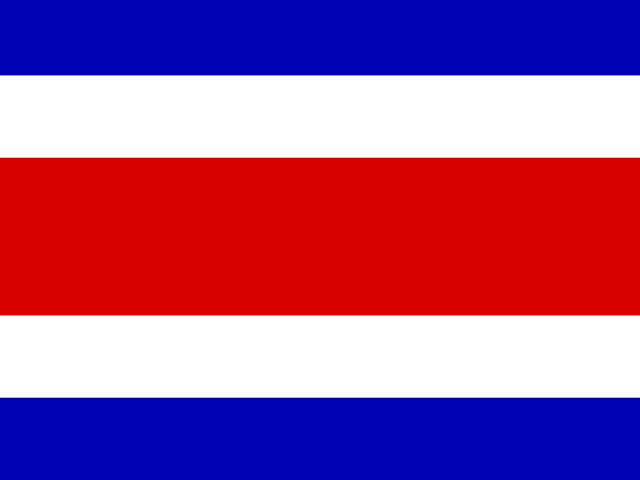 Costa Rica digital nomad visa
The Estatuto de Nomada Digital gives a year, renewable to two, and exempts qualifying foreign income from local tax, a stable Central American base for French remote workers.
$3,000/mo · 1 year, renewable up to 2 years
- 10
 Barbados digital nomad visa
The 12-month Welcome Stamp is simple and levies no local income tax on the visa, an easy Caribbean option within reach of French clients in the Americas.
$50,000/yr · 1 year, renewable
Your home-country tax obligations
France defines tax residence in Article 4B of the Code general des impots, and meeting any one of four tests makes you resident for the year: your foyer (home and family) is in France; your principal place of abode is in France, where the 183-day idea shows up as a practical measure of where you spend most of the year; your main professional activity is in France; or your centre of economic interests is in France. Because any single test is enough, you can leave France physically and still be resident if your spouse and children stay behind or your economic life stays anchored here. A resident is taxed on worldwide income; a non-resident only on French-source income. France has a broad double-tax treaty network that usually decides ties and prevents the same income being taxed twice. One rule needs specialist attention: the exit tax under Article 167 bis. If you were French tax resident for at least six of the ten years before you leave and hold securities worth at least 800,000 euro, or 50% or more of a company, France can tax the unrealised gains on departure, though the charge is generally deferred while you hold the assets and can fall away over time. A 2026 proposal to lengthen the monitoring period was rejected. This is general information, not tax advice — take French and destination advice before you move.
General information, not tax advice. See our nomad visa taxes guide and consult a qualified adviser.
What french citizens typically need
- French passport valid for the whole stay, usually with 6 to 12 months beyond your entry date
- Proof of remote income: an employment contract with a non-local employer, or freelance client contracts and invoices
- Bank statements over three to six months showing the required income or savings
- Private health insurance valid in the destination for the full visa period
- Criminal record extract (extrait de casier judiciaire), often apostilled and recently issued
- Passport photos and proof of accommodation or a local address
What a French passport already covers
There is no nomad visa to apply for inside the EU and EEA. As an EU citizen you can move to any member state, register locally, and work remotely with no income floor to clear. That takes most of Southern Europe's nomad programmes off your list, since they exist to admit non-EU nationals who do not have the rights you already hold.
Outside Europe the passport still earns short visa-free or visa-on-arrival entry almost everywhere, but that is a tourist window, not permission to base yourself for a year. A nomad visa is what turns that short stay into a legal long one.
- EU/EEA: free movement, no visa, no income test
- Rest of world: strong short visa-free stays, nomad visa for longer
- Francophone bases like Mauritius, Seychelles and Cape Verde ease the language barrier
Choosing a base outside the EU
Sort candidates by what they add over an EU move. Zero-tax hubs such as the UAE, and in practice Mauritius, Seychelles and Barbados, suit French citizens who have fully ended residence and want to be taxed somewhere new. Value bases such as Thailand, Mexico, Colombia and Georgia keep costs low while you keep invoicing in euro or dollars.
French speakers get an extra lever: several strong options are francophone. Mauritius, the Seychelles and Cape Verde all combine remote-work permits with French being widely spoken, which smooths banking, healthcare and daily life in a way an unfamiliar language does not.
Leaving France without staying resident
Because any one of the four Article 4B tests can keep you resident, a real exit means moving your whole centre of gravity, not just your body. If your family stays in the French home or your main income and assets remain anchored in France, you can still be taxed here on worldwide income even while living abroad. Line up where your foyer, your main activity and your economic interests sit before you count on non-resident status.
If you hold a large securities portfolio, check the exit tax under Article 167 bis before you go: it can apply where you were resident six of the last ten years and hold securities worth at least 800,000 euro or half of a company, though the charge is usually deferred and can lapse over time. A French adviser can confirm whether it touches you and how to file it.
FAQ
Do French citizens need a digital nomad visa to live in Spain or Portugal?
How does France decide if you are still tax resident?
Is there a French exit tax for people leaving to work abroad?
Which digital nomad visa is best for French citizens?
Will French citizens be taxed twice, at home and abroad?
What documents do French citizens need for a nomad visa?
Sources
Every income threshold, duration, fee, and rule on this page traces to an official government or consulate source. Last verified July 21, 2026.
- PwC Worldwide Tax Summaries — France: Individual residence ↗
- Global Law Experts — France Exit Tax for Expatriates (2026) ↗
- Your Europe (European Commission) — EU citizens: residence rights ↗
See our verification methodology and themaster source list.